
Robotic Hernia Surgery
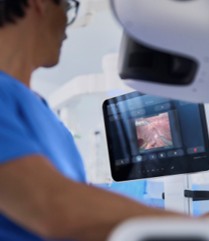
The surgeon is in control
The surgeon controls the extremely fine, flexible instruments in the robotic arms from the console.
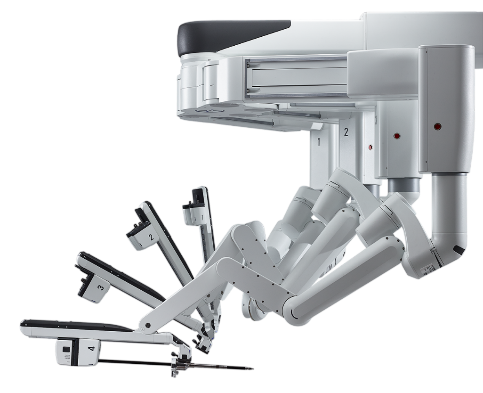
Precision
The daVinci system perfectly tracks every small hand movement of the surgeon.
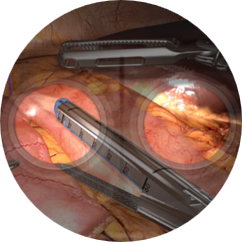
Perfect vision
Up to ten times magnified, 3-dimensional image of the surgical area. The surgeon sees the anatomy more clearly than would ever be possible with the naked eye.
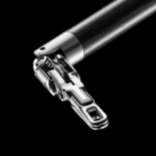
Mobility
The small, articulated instruments are more flexible and precise than the human hand.
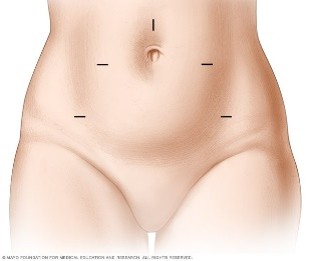
Small incisions (8 mm)
Nerve preservation, lower chronic pain. Faster return to everyday life.
Key advantages of the da Vinci system in hernia surgery

Shorter hospital stay
Less pain
Lower wound healing and surgical site infection complications

Lower hernia recurrence rate

More precise surgical dissection and mesh placement
Avoidance of tissue-fixation staples
da Vinci robot - Introduction
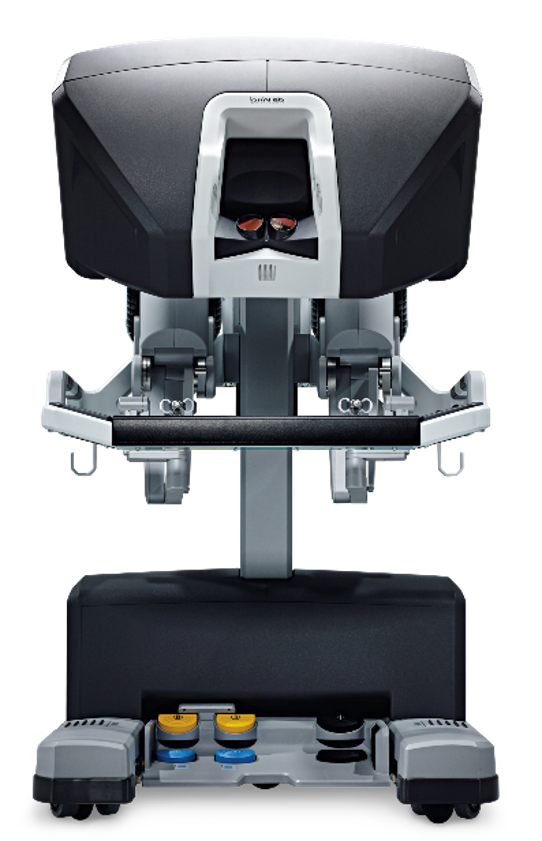
The surgeon operates while seated at this console, controlling the instruments using console arms in a magnified 3D view, with a range of motion and flexibility greater than the human hand.
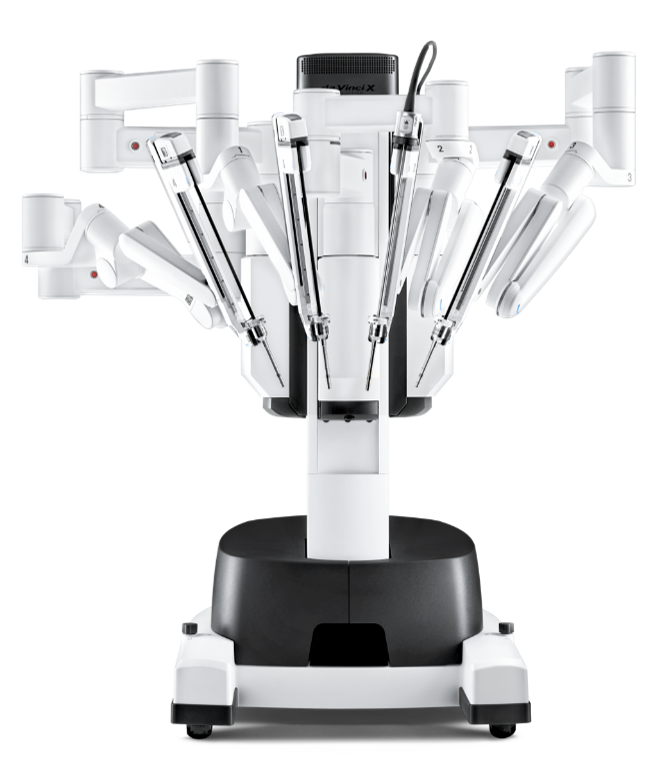
This is the so-called patient cart, which stands at the operating table, and the instruments controlled by the robotic arms track the surgeon's hand movements in real time.
How does robot-assisted hernia surgery work?
During the procedure, instruments are inserted into the abdominal cavity through several small incisions, however, the surgery is not performed directly by hand, but with the help of a robotic system controlled by the surgeon.
The surgeon sits at a console and controls the robotic arms through a high-resolution, three-dimensional image, which work with extremely fine, precise, articulated instruments. This technology significantly exceeds the technical capabilities of traditional laparoscopy, especially in the case of more complex, larger, or harder-to-reach hernias.
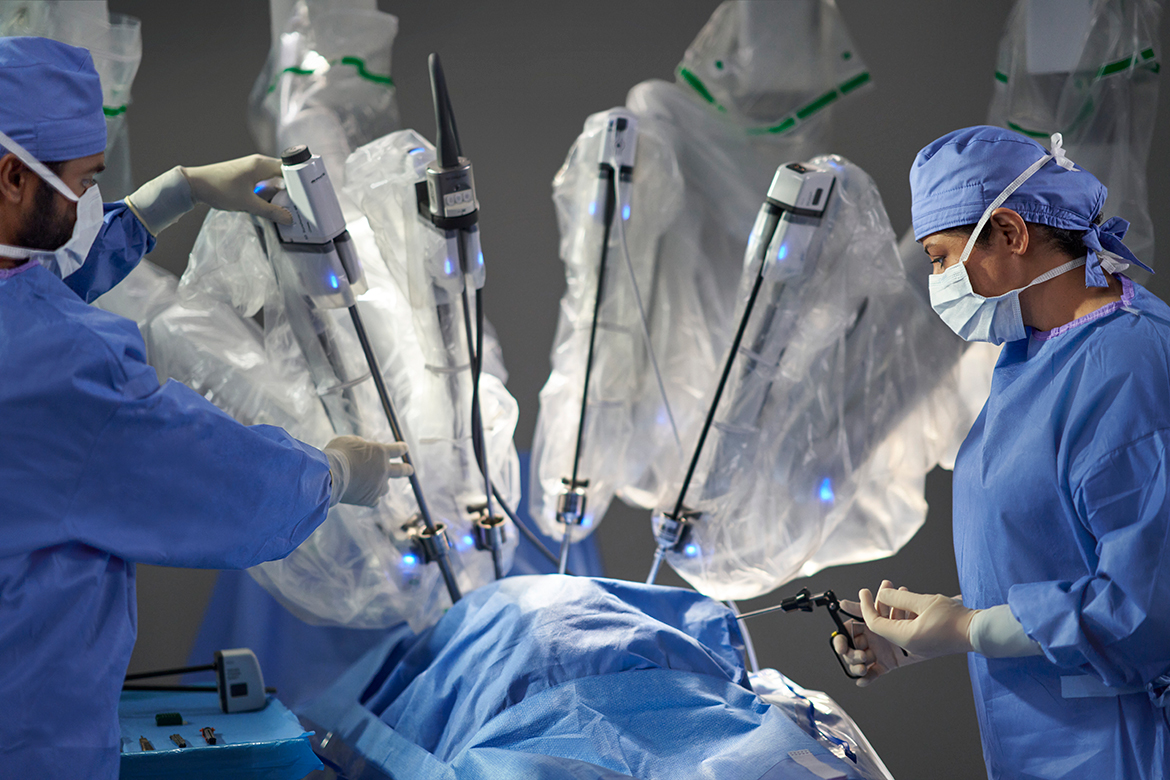
The robot is docked. This means the proper positioning of the robotic arms and instruments and the introduction of instruments into the abdominal cavity. This process takes approximately 10-15 minutes.
A wide variety of surgical procedures are available, which are planned based on the type of hernia, previous physical examination and CT images. Generally speaking, in the first step, with the help of robot-assisted technique, the protruding tissues are returned to the abdominal cavity, and then the abdominal wall defect is closed without tension - depending on its size and type.
After the defect has been closed, a special hernia mesh is implanted into the appropriate layer of the abdominal wall, which strengthens the abdominal wall and reduces the chance of recurrence. One of the greatest advantages of robotic surgery is that it enables precise and easy creation of the mesh placement.
The most important aspect of mesh placement is that it should be placed between the appropriate layers of the abdominal wall. Extraperitoneal placement is most advantageous, providing better long-term results. Since the mesh is located outside the abdominal cavity, it does not come into direct contact with the intestines – thus avoiding various intestinal injuries, adhesions, and bowel obstruction complications.
Recovery after robot-assisted hernia surgery
Recovery time depends on the type and size of the hernia, the patient's general condition, and the complexity of the surgery. Generally speaking, most patients can go home within 1–2 days. Physical rest is recommended for the first 2–3 weeks; heavy physical work, lifting weights over 5 kg, and strenuous sports should be avoided.
Movement and walks necessary for daily activities can be started immediately after surgery, and after 2 weeks, the load can be gradually increased. Full physical activity can typically be resumed after approximately 4–6 weeks.
Complications are rare, most can be treated conservatively, and further surgery is only necessary in exceptional cases.